A Way Forward

photo-1431960128106-aab3b6cf9b4a-1

Michael Browning, unsplash.com

We are a divided United States. The tone and rhetoric of the presidential campaigns was as divisive as I can personally remember. The hyperbole and fear-mongering turned all the way up to 11. It felt as if we were becoming more polarized with each passing day.

And then the election happened. The person who was elected president was not the person with the most votes. That is our system and, like it or not, that is where we are today. Over half of those who voted are angry and/or disappointed. While a large percentage of us celebrate, another large percentage of us grieve. People are protesting, friendships and families are being pulled apart, and the ugliness continues.

Our exit polls tell us that our country continues to be divided by race. We are split on what issues matter most to us and the best ways to handle them. We are divided on our outlook and by our religions. We are divided by urban and rural population groups.

To be clear, we have been divided in the past. We once enslaved people. We once had a sitting vice president kill a political enemy in duel. We once fought a war between states. We once had separate drinking fountains for people based on skin color. Division isn’t new to the US of A, but it’s not good for her either.

Will we ever unite again? Are we doomed to polarize until something breaks? Is this the new normal? I believe there is a way forward.

Simply put, we need each other. We need our varying opinions; we need our vast array of experiences. Our differences do not have to separate us. They don’t have to alienate us. We do not want uniformity, but we do need harmony.

Harmony allows us to sing distinct notes or play unique parts while working toward the same goals. Harmony allows our differences to combine for something bigger and more beautiful. Harmony will lead to us unity.

This was the vision of our founding fathers. They set up our nation so that we could find room to disagree while still having protections and a say in the process. They wanted everyone to have freedom and a voice. John Adams said, “When all men of all religions shall enjoy equal liberty, property, and an equal chance for honors and power, we may expect that improvements will be made in the human character and the state of society.” Actual American patriotism is rooted in diversity.

Unifying despite our diversity will be neither quick nor easy. If we are to harmonize it will take hard work, patient determination, and calm resilience. It may eventually take acts of Congress or grassroots organization, but we can start today with the small things.

The way forward I would like to propose is the way of the kitchen and dining room table. If our country is ever going to be big enough for all of us, a good first step will be to make sure our tables are big enough for all of us as well.

When we pull up a chair at our table we communicate that a person has value. When our lives intersect with one another, we find that along with our differences we carry things in common. When we share the same experiences, we see our shared humanity. When we sit and talk with people who are not exactly like us, we learn and we grow and we are better for it.

If you don’t know why a person could possibly support Donald Trump, have dinner with someone who did. If you can’t fathom why a person might vote for Hillary Clinton, ask someone who did to go for coffee with you. Don’t try and change their mind or show them how wrong they were. Listen to them. Right or wrong their opinion is just as valuable as yours.

Invite a person of a different race into your home. Ask them their story. Ask them what they feel is unique to their experience.

Instead of mocking people for wanting a safe space, create one for them in your home or office and hear them out. Maybe you’ll both be better for it.

Instead of characterizing anyone who doesn’t agree with you with the worst labels you can come up with, ask them how they came to their conclusions. Maybe you have the wrong idea about them. Maybe they have the wrong idea about you. Maybe you are both partially wrong.

Find someone who has immigrated to our country. Talk to them about why they came and what the American dream means to them. Ask them what things they like or don’t like about our immigration policies.

If a person is responding to this election by saying they are afraid, ask them to help you understand where their fear comes from. To dismiss pain and fear is to dismiss people. That is not the way forward.

Instead of sharing sound bites and memes, share apple pies and book recommendations.

If you don’t understand the things that concern a 20 year old, get to know a 20 year old. If you can’t comprehend how a 64 year old might feel about the direction of our country, go talk with them.

Find people who disagree with you on something divisive, then find what you have most in common and celebrate it. We might disagree on the best way to do healthcare but maybe we can agree to love our local sports team. Let’s make finger foods and paint our faces and unite around that.

When is the last time you sat and talked with a person who practiced a different religion or no religion? Are you even sure what other faiths believe or don’t believe? Spend time together.

If you can’t think of anyone you know or anyone you love who believes differently than you do, that is a major part of our problem. We’ve isolated ourselves from our neighbors and fellow citizens which makes it easy to assume we are always right and demonize anyone who thinks otherwise.

Some say fences make great neighbors. I say fences make poor tables. Let’s tear down what separates us and use the wood to build a bigger table with room for everyone, even those we do not yet understand or appreciate or agree with. This is a first step toward a united nation. This is a first step in overcoming the worst parts of us. 

Unity won’t mean that we all agree. It won’t mean that suddenly my convictions will change. Realistically it won’t solve all our issues. It will, however, mean that I can’t dismiss you immediately. It will mean I am more likely to hear what you have say. It will mean that I can’t label you my enemy because you believe differently.

It is a lot harder to hate a person for their beliefs when you love them for who they are. If we value each other as part of a common community we will work to find a way to bridge the divides between us. We will compromise where we can, agree to disagree when we must, and be united by our shared care and concern for one another.

Let’s start here. Let’s learn from each other. Let’s sit and talk. Let’s listen.

The way forward is around a table, sharing a meal and a laugh. The way forward is watching as our kids play together in the front yard. The way forward is working shoulder to shoulder to make our communities a better place. The way forward is in being teachable. The way forward is you and I and us and them, doing life together, loving each other from the start, and putting in the hard work to make sure we are doing right by each other.

From city to farm. From Christian to Muslim to Hindu to atheist. From white to brown to black. From rich to poor. From gay to straight. From Trump Train to those With Her. From sea to shining sea. You are welcome at my table. Let’s move forward, together.

To My Non-Christian Friends This Election Season

To My Non-Christian Friends, dearfriends_black

This election season has been something else, huh? (Here is a video of puppies if you need something to cheer you up.) Take heart, it is almost over. We have at least until February before people start openly campaigning for 2020.

In the meantime, I’d like to say something to you. Specifically, I’d like to say sorry. I think you have seen us Christians at our worst lately and for that I apologize.

I’m sorry that you’ve seen so much fighting between us. We can be brutal to each other and we call ourselves family. We fire missiles from all sides of the aisle and don’t worry too much about collateral damage. It probably isn’t very inviting when we behave this way. I’m sorry if you are less likely to want to be around us after all this.

I’m sorry that you’ve probably gotten into a debate or two with one of us. I’m sorry that we don’t often fight very graciously. I’m sorry that we stoop to things like name calling and rapid dismissal.

I regret that we often want to be heard, rather than hear. That isn’t very kind of us.

I’m sorry if you were unfriended because of your political views. I’m sorry we value our opinions more than your friendship. I’m sorry that we let partisanship get in the way of relationship. There are things we will all never agree on, but that shouldn’t stop us from sharing meals and photos of our kids and life in general.

I’m sorry that you see us defending things that are indefensible. Things Jesus would oppose. Things we have routinely and loudly condemned. I’m sorry that we hold a double standard so that we can excuse our candidates and condemn someone else’s. That’s not consistent and its certainly not Christlike.

I’m sorry for all the false memes and bunk articles we have posted. We don’t think very highly of lying, but we are at times in such a rush to be right we fail to check our information. That isn’t very good of us.

I’m sorry if we have led you to believe that a person’s eternal destiny hinges on how they vote. We don’t actually believe that, though we sometimes act and preach like it. Sometimes we (rightly or wrongly) put a lot of hope and energy into these things, but if you give us a time to catch our breath we will remember it is grace, not ballots, that save us.

We sing a song that says our hope is built on nothing less than Jesus. I’m sorry we haven’t acted that way lately. While we want to have a say in government, ultimately our hope is not in presidents and senators and legislation.

I’m sorry if you’ve been hurt by the way we talk about the candidates and their supporters. Regardless of politics you and they are loved and cherished by God. We’ve failed to reflect that too often. That grieves me.

I apologize that regardless of which side we are on, we are often unable to understand where you are coming from. I’m sorry if we talk down to you or figure you couldn’t possibly know or have hurt you with our assumptions.

I know it is probably hard to see through all the nonsense, but Jesus is better than we represent. I’m not sure of a lot of things, but I’m absolutely positive of that. I’m sorry if we have failed him and you this election season.

If we are honest we are just regular ole humans. We mess up, we don’t always do what we want. We can be too passionate, we can be misguided, we can be flat wrong. Please don’t hold that against Jesus.

I can’t speak for all of us, but I can speak for me. I would trade in all this election stuff if it meant people would be more likely to consider following Jesus. His ways are better. We have a saying that goes like this, “His grace is sufficient.” The grace of God is sufficient to cover our weakness and our mistakes. We greatly depend on that.

Now I’m asking for grace from you. Please forgive us for our actions and attitudes, our words and our compliance. Please forgive us for pointing you toward a political party more than Jesus. Please forgive us when we cross the line, wound others, or look no different than any other person you know.

We are supposed to do better than that. We have been wrong. Maybe not all of us, but some of us, including me. And I’m sorry.

What Kaepernick, Immigrants, Republicans, and You Have In Common

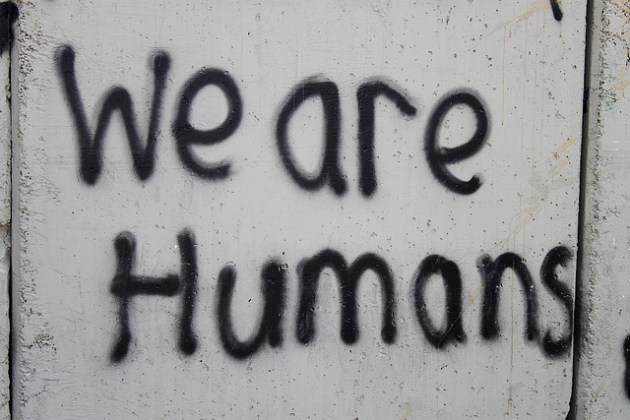
humans.jpg

source: generationnblog.wordpress.com

There have been several stories in the news over the past few days that have bothered me:

I have this question: What is wrong with us? How has this become the way we respond to people who are different? It isn’t that we are just so passionate or a little too polarized. These things speak to a lack of decency and a seemingly increasing inability to see value in other people. This is not okay and we need to reconsider some things to bring it a stop.

So let’s start with the basics.

What do Colin Kaepernick, Republican campaign workers, and Somalian refugees have in common? They are human beings. Just like the people who responded to them in evil ways.

And being a human means a few things. It means they are someone’s son or daughter. They could be someone’s mother or father, aunt or uncle, brother or sister, grandfather or friend. They are loved by people. They matter to somebody. They are connected to others.

Being human means they have hopes and dreams and fears. They have plans for their kids. Their dogs are counting on them to be home in time to let them outside. They have projects around the house that need attention. They hate when their cereal gets soggy. They have seasonal allergies. They are real people.

We have to remember that everyone is a person first. It seems simple, but it’s not.  They are a person before they are a statistic, before they are a candidate, before they are a Christian or a Muslim, before they are “all that is wrong with America today.” They are flesh and blood, heart and soul, people.

They may make you irate, they may do things you consider immoral, they may vote from opposite worldviews, and they may be different than you in every way, but they are people. Which means you have something in common with them. If we can start with our common humanity, perhaps we can begin to move toward something better than hate and division.

In the book To Kill a Mockingbird Scout quips, “I think there’s just one kind of folks. Folks.” Her brother dismisses her as young and naïve, but I think she is on to something.

There are a lot of ways I may be different from another person. Religion, politics, economics, culture. Some of those differences are things I am not able to set aside. I can’t or won’t change who I am in a lot of ways. For instance, I will never be a New York Yankees fan. This is unthinkable. I have principles. But it doesn’t mean that I have to reject the humanity of those who support that team. They are folks just like me.

Despite our differences, we share something first. And it’s not just that we share tangible things like skin and bones, but there is something deeper that connects us all and informs the way we should treat one another.

The Scriptures say that people are made in the image of God. All people. Not just a select few, not just the ones with the right beliefs. All of them. It extends to all political parties and sports fans and nationalities. It crosses religious divides and language barriers and class systems. If you are human, you bear the image of God.

So I can’t hate you. We have too much in common. We are image bearers. We are people. All of us. And people are meant to be loved.

For me and my tribe, the followers of Jesus, this is not optional. Not one bit. Even if we are confident that protesters and party leaders and immigrants are the enemy, Jesus says to love them anyway. In fact, the more we are convinced they are the enemy, the more our love toward them should grow. That is the way of Jesus.

I believe the more we look at our story, the more we see all the things we share universally. For all have sinned. For God so loved the whole world. Good news of great joy for all people. There is plenty here for us to build on.

So let us start with what we have in common. Let’s start with the fact that we are people. We are all folks. Even when we are different, even when we disagree, even when we are confident we are in the right.

We have got to do better. We have to refuse to be part of the continued dehumanization of “the other.” We cannot allow our world to be a place where people are hated or dismissed or hurt because they vote differently or worship differently or think differently or have a different skin color. We have far too much in common for that to continue.

You and I must remember our shared humanity with the people on the news and the people across town and the people around the world. We share something with the person who is driving much.too.slowly when you are in a hurry. With the waiter who is neglecting your long empty sweet tea. We share some things in common with the annoying guy at work. With refugees and Democrats and The Donald. With the people we don’t understand. With our neighbors.

They are human. Just like you. They aren’t perfect. Just like you. They have experiences and stories. They have hopes and fears. Just like you. They aggravate someone. Just like you. They are made in the image of God. Jesus died for them. They are meant to be loved. Just like you.

Let’s start there and see if we can’t make this world a better place for everyone. Let’s set aside as much “us and them” language as we can and stick to the things that make us “us.” Let’s see the shared humanity in everyone we meet.