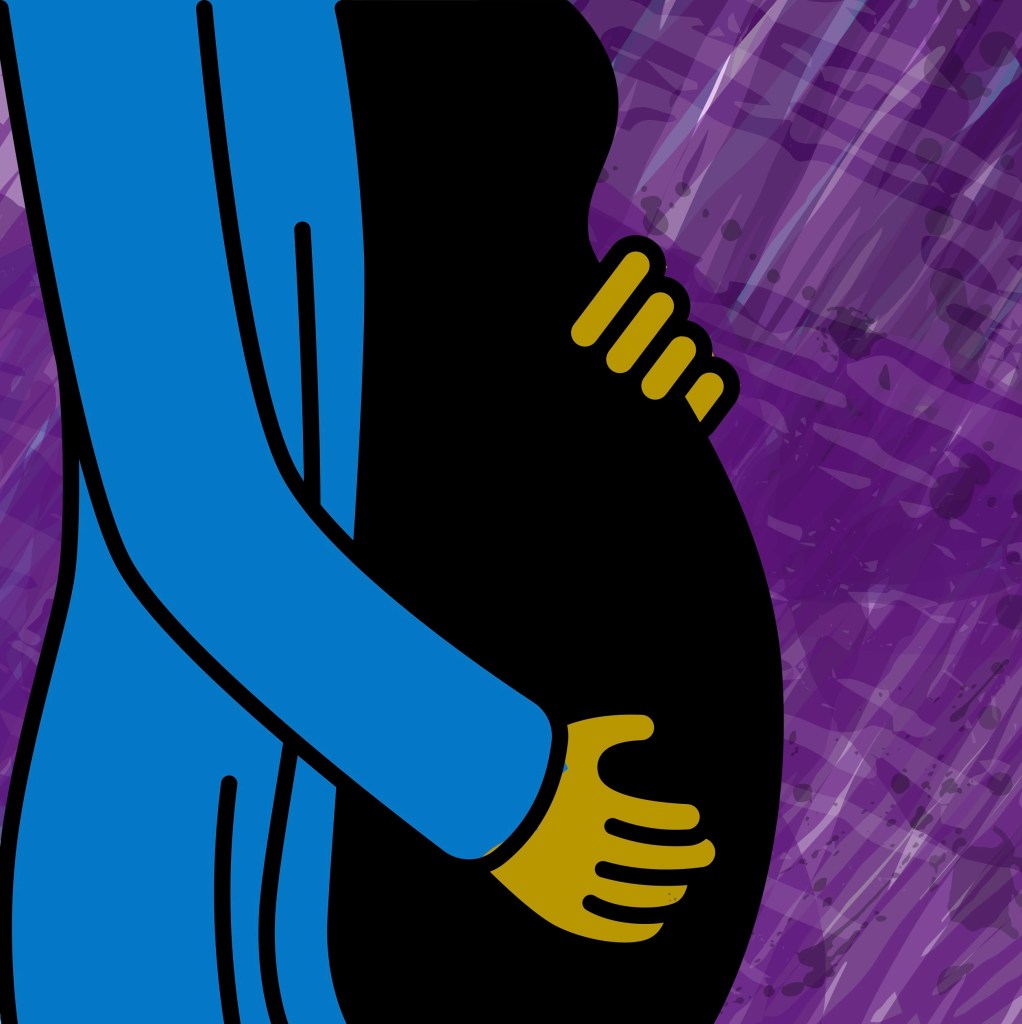
Not quite Christmas.

It is not quite Christmas,

and her work is not quite done

(a mother’s never is),

but Mary has been preparing for months.

She has prayed and sung and fed

and her skin has been stretched

and blood pressure been raised

and her feet and ankles have swollen.

The work of Christmas doesn’t begin (or end) with labor, but with nourishment and making space. It doesn’t begin with heavenly choirs but in silent and tender moments of stomach caresses and gurgling, discomforting moments of morning sickness.

The work of God in the world is at times big and grand and accompanied by angelic armies and sometimes it is found in the quiet, faithful endurance of a young girl swallowing back heartburn and dreaming of the future for a child she has yet to meet.

We need both. We need Christmas and celebration. And we need the unnoticed, daily preparation that happens in small, and at times, uncomfortable ways.

The world we want doesn’t just appear. It takes work and waiting and stretching and sacrifice – just like the work of an expecting parent. It starts small, in the dark, and often goes unappreciated. But the work here is vital and formational.

How we carry ourselves in the time leading up to the big and grand matters. We cannot fast forward to the good part. There are no shortcuts to Christmas.

But we can be faithful along the way. We can walk, or waddle, like Mary – trusting, enduring, paying attention, making space for God to be present. Even when it’s painful or seems like the waiting may never end. Even when it leaves us wondering what in the world we have gotten ourselves into.

The work has already begun. God is on the move. And we can be part of it.

Like

Comment

Share

When Babies Threaten Empires

Some days get lost in the shuffle. Days like the Feast of the Holy Innocents.

While some of us return to work and return unwanted gifts and continue pretending we’ll start resolutions next week, the historic Church has chosen this week (various branches observe it on different days) to remember the innocent lives lost around the nativity of Jesus.

In the story that has led to candlelight worship and caroling and God With Us, there is a tragic chapter. The local puppet king is not thrilled that a rumored new king has been born. New kings and claims to the throne are a threat to his way of life.

So he does what empires do and destroys those who might weaken his image, wealth, and prominence. And he does it without any regard to collateral damage. Herod has all the boys in and around Bethlehem murdered. Anyone 2 years and under is killed.

The complete and utter agony of it all. The pain of mothers who have nursing babies torn from their arms. The grief of fathers who were just helping guide first steps. The lives extinguished. The long hoped for and dearly loved, gone in act of raw evil carried out by petty, powerful men and their complicit followers.

The Church asks us to remember.

And in our remembering, we are brought face to face with the reality that the way of Jesus is a threat to empire. It is a threat to any who hold or achieve power through corruption or violence.

We remember that the birth of Jesus is not just a cute story we tell before exchanging gifts. It is inherently political. It points to a different and better Kingdom. One without backroom deals or borders or bombs and one where the King serves rather than demands, loves rather than fears, dies rather than kills.

The way of Jesus and the way of empire are incompatible. They are opposites.

Our struggle is empires didn’t fade out with Herod or Rome. They operate in our world with impunity, gripping power and trampling others in the name of “the greater good.” The way of empire is seen in our political structure, for certain, but also shows up in our homes and ethics and churches.

Sure, we’d never condone the mass murder of children but the values and motivations of empire appear long before any blood is spilled. Empire quietly shapes our why and our what and quickly deviates from the way of Jesus.

When those unlike us automatically become enemies. When we are willing, as one pastor put it, to leave bodies behind the bus. When we ignore the plight of the desperate. When we believe the myth of scarcity over the abundance of grace. We are on the path of empire.

When the old or young or different or messy are pushed aside. When folks chase power and prestige at nearly any cost. When we are more machine than human. More warrior than healer. We are more like Herod than the baby he feared.

We see threats around every corner. We cling to comfort. We look out for number one. We take short cuts to get to or remain at the top.

But the way of Jesus is down. Is as vulnerable as a newborn. Is as slow as a child learning to walk, then read, then grow into an adult. It washes feet and welcomes children. It is not self-seeking, even when seeking self might lead to more privilege or prowess or influence.

We can pray and evangelize and build cathedrals and sing the songs and still be caught in the web of empire. It is sticky because it is practical. It get results, pads resumes, and keeps us fed. It convinces us we are the chosen ones. We are the rightful leaders, rulers, party, church, or whatever.

Which of course is a lie, a scheme to help us sleep at night. An end to justify any awful means.

Ultimately we have a choice: We can reflect Herod or Jesus. We can follow the slaughterer of toddlers or the Prince of Peace.

In our workplaces and worship centers and politics and boardrooms and around our dinner tables. We have to decide which kind of kingdom we want and which kind of king we follow. We have to decide if we will abandon our claims to the throne. The martyrdom of these children, and the victims of any and all empires from then till now, ask us to pick a side, to choose a way forward.

May we remember the Holy Innocents. May their deaths redirect our minds and hearts from the things of empire to the things of God. May we be repulsed by the way of Herod in all its forms. And may we be captivated by the way of the helpless babe, laid in a manger.

Breaking Up On Purpose

broken heart

Image Source: Spectator Health, UK.

One of my middle school friends was broken up with today. He is a basketball star, she is one of the cool kids. After a couple weeks of dating that consisted of little more than sitting together at lunch and texting after school, he was convinced she was the love of his life.

He loved her with his whole 14 year old heart.

Now, you and I know better. We know this was infatuation. We who have the wisdom of years know that love is more than butterflies and more than the excitement of reciprocated attraction.

But the pain my friend is feeling is real. Even though this was not a deep, committed love, his heart is breaking for the loss of relationship. It stings.

And this sting of the heart is the invitation in season of Lent. We are invited to let it hurt.

On purpose and for good cause.

Lent often begins with a call from the prophet Joel:

Yet even now, says the Lord,
return to me with all your hearts,
with fasting, with weeping, and with sorrow;
tear your hearts
and not your clothing.
Return to the Lord your God,
for he is merciful and compassionate,
very patient, full of faithful love,
and ready to forgive. Joel 2:12-13

Those of us who are human have a tendency to get our hearts caught up in things that are not full of love. Not real love. At least not the faithful love of God.

We are captivated by cute and shiny things, much like middle schoolers. We are enamored with mutual attraction. We like being liked. The butterflies, the status it brings, the fun of young love infatuation.

Unfortunately, these infatuations are not as innocent as they were in middle school. They distance us from God and God’s desires for us. They cheapen our commitments to each other. They fill us with empty things. They call for our allegiance. They distract. They numb. They consume. They block out any conviction that might otherwise call us back to the right path. 

They tell us we are loved and they ask for our whole hearts. The first part is a lie and the second is a death sentence.

What starts out as a fleeting middle school romance quickly turns into full fledged idolatry and adultery. What seemed fun and harmless becomes the thing that destroys our faith, our witness, our church, and/or those we most care about.

And so in Lent we take the time to ensure this is not happening to us. We do the hard work of breaking our own hearts. Of examining where and to what we give our attention. We break up with our crushes even when our crushes look like everything we’ve been searching for. Even when it hurts.

More than just ripping our clothes (an ancient act of sorrow) or going to a worship gathering or saying “I’m sorry” or jumping through the next hoop, we rend and rip our hearts. We get in there where it stings and we let it make us uncomfortable.

We let it sting believing that the sting teaches us. It reminds that these things (whether good or bad) can distract us. It reminds us that they are not truly life giving. It reminds us that God alone is worthy of our whole hearts and allegiance. And it helps us remember just how much work we still need.

Perhaps it is people’s opinions that easily catch our attention. Or maybe its the pursuit of endless pleasure that draws our eye. For many of us it is the allure of power and control. For many it is our allegiance to partisanship that is standing in the way of faithful love.

It can be something as simple as Facebook and as complex as our core identity. Some of these things are new and some of them have been making their way into our hearts for years and years.

The invitation from God for us this day is to, “Return to me with all your hearts.”

The way to ensure we are doing this is to put an end to these other relationships. To break up with (even temporarily) whatever may be in the way of what God wants to do with and through and for us. One typical way to do this is through prayer and fasting. 

Perhaps you and I should abstain from social media for a while. Or political news. Perhaps we could channel the energy we put into politics towards our faith or our family. Maybe we take a break from food or drink, especially when we reach for these things in times of trouble. Maybe its a person. Or a bad habit. Maybe its a break from television that numbs us to death. Or perhaps there is something new we should begin or return to (perhaps a commitment to a faith community) that can help us align our hearts with God.

Whatever it is, however good or bad it may be, we have to put in the work. We need Lent because it is too easy to sit idly assuming that everything we do and and are attracted to is good and godly when there is ample evidence in human history and our very lives that demonstrates this is probably not the case. We need work. Lent is an invitation to allow God to do that work in and alongside of us.

Even when it stings. Perhaps especially when it stings.

My friend will be fine when he realizes this girl wasn’t really the love of his life. Though he hurts today he will be better sooner rather than later. One day he may think how fortunate he is to have not wasted time and energy in this relationship.

May it be so in us as well.

May we have the courage to break our own hearts for the sake of our faith. May we be willing to sit in the sting of heartache long enough to know where true love is found. And may the pain and anguish of a break up turn us back to the God who “heals the brokenhearted and bandages their wounds.” May we find life in response to the death of our middle school crushes.