Hosanna.

On Palm Sunday a lot of people wanted Jesus to save them. That’s what “hosanna” means – save us now.

The people wanted Jesus to save them from economic hardship, to save them from their political rivals, to save them from powerlessness. To restore them to the good old days. To conquer and vanquish their enemies. To make them great again.

But Jesus wasn’t interested in any of that. He wasn’t trying to establish a Christian nation. He wasn’t concerned with wealth or seats of political power or passing laws to enforce his worldview. Jesus wasn’t trying to build a holy version of empire.

He still isn’t.

By Friday he will be abandoned by all but a few, because who wants to follow a guy who won’t take up the sword against evil? Who wants to follow someone who would willingly surrender, turn the other cheek, lay down his rights? Who would rather die than kill?

Not very many. At least then.

Or perhaps now.

Perhaps we too have abandoned Jesus and his way, despite claiming we want him to save us.

And perhaps the thing we most need Jesus to save us from is our lack of imagination beyond the halls of power and bank account balances and the ability to control. We need saved from the lie that the only way to change the world is through violence or threats of it. Or the lie that clinging to our life is the only way to keep it. We need saved from a hunger for greatness that looks more like gilded palaces and less like the washing of feet.

Jesus is remaking the world through kindness and gentleness, peace and joy, service and selflessness. Through inclusion and community and healing and shared meals. Through the way of the cross and the holy love of God.

He redefines what it means to be strong and faithful and just. In the upside-down Kingdom of God the last are first and the small are mighty and the meek inherit the earth. Here the poor are our siblings and the lines we’ve drawn around ourselves or others are erased.

This is where salvation is found. This is where life conquers death. This is where all is made new.

The question is, do we believe it? Are our actions, attitudes, priorities, conversations, and everything else informed by this truth? Will they be moving forward? Come Friday will we look more like the faithful few at the foot of the cross or like those who would sooner insult, condemn, trample, or crucify any who get in the way?

Hosanna, indeed. God save us from ourselves and our lack of faith. God save us now.
No weapon formed against you.

“No weapon formed against you shall prosper.”

I keep seeing this Bible verse in response to the violent attempt against Donald Trump’s life.

I am glad he survived – and violence has no place in our politics – but this usage of Scripture is nonsense at best and idolatrous with ease.

This verse is from Isaiah 54, where the writer is speaking to Jerusalem, the city, the center of the Jewish faith. It is not about a person, then or now.

Neither Trump nor Biden are Jerusalem. They are not the center of faith – at least not any faith that isn’t blasphemous.

We cannot grab any ole verse out of context and apply it to our current situation.

Anyone quoting Isaiah 54 would likely be upset by someone else quoting Revelation 13, “One of the beast’s heads looked like it had sustained a mortal wound, but its fatal wound was healed. Rapt with amazement, the whole world followed the beast.”

Gross, right?

The Bible is not about Trump or Biden. Or the USA. Or any election.

God is not promising no harm will be done to your preferred political candidate (or pastor or modern nation state or pro athlete or you).

Even Jerusalem has suffered harm and violence after these words were originally spoken.

And what of Corey Comperatore, who lost his life to a bullet intended for the former president? Why do weapons formed against a politician not prosper, but weapons against fire fighters in the audience do? Or kids in classrooms?

For Christians, this is particularly perplexing because the guy we follow was crucified, died, and buried. Escaping death and harm is no where promised to us. We are people who believe in laying down our lives, not sanctified bubble wrap.

Ascribing God-ordained protections or callings to a modern political candidate is a dangerous game. These readings elevate people to a status that does not belong to them. They become deified, infallible, untouchable in ways that lead us astray. It keeps us from asking the questions we should be asking, pushing back where we should be pushing back, and marries our good God to these less than perfect people and platforms.

So, if you’d made it this far, reject violence and reject shallow readings of Scripture. Reject reading the Bible as an out of context magic 8 ball. Reject the idea that God can only use one person or that some people are above accountability or correction or even death because they are “anointed.”

We can do better than this.

Not quite Christmas.

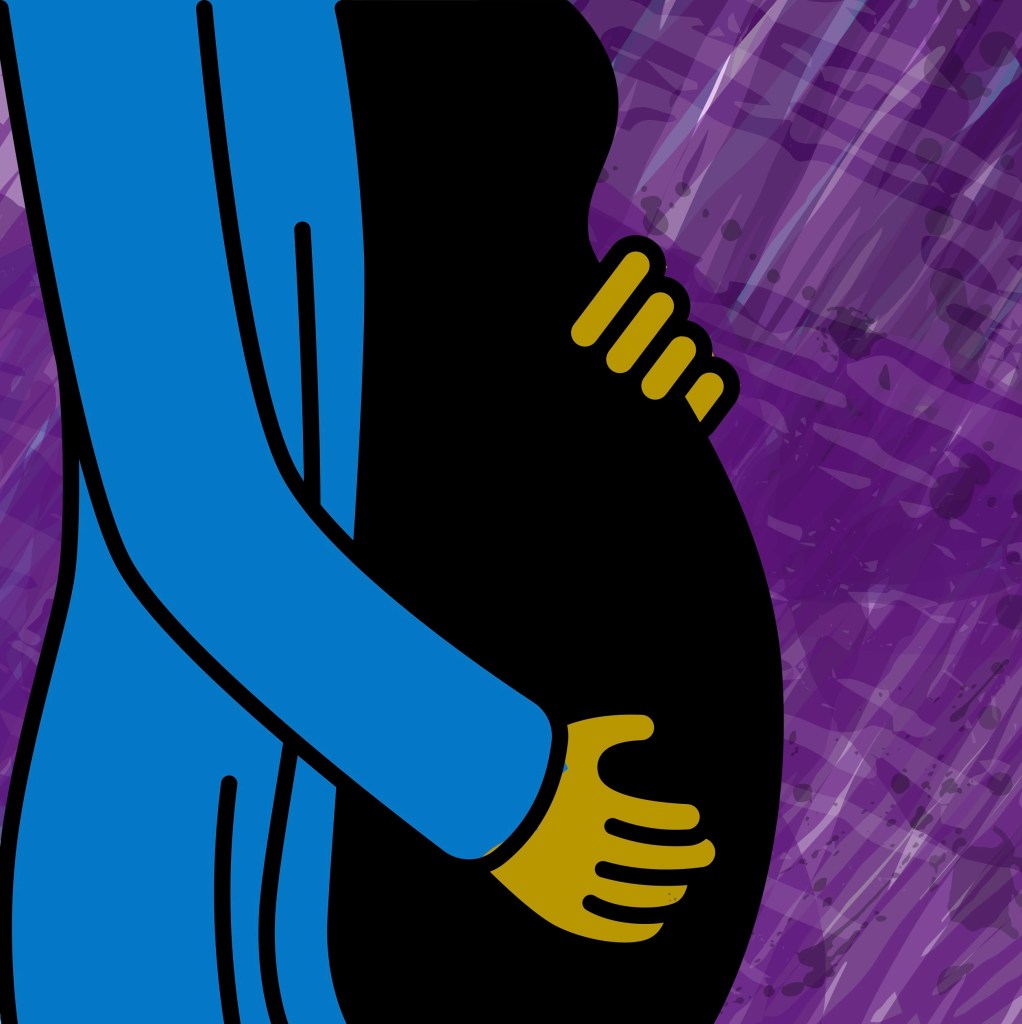
It is not quite Christmas,

and her work is not quite done

(a mother’s never is),

but Mary has been preparing for months.

She has prayed and sung and fed

and her skin has been stretched

and blood pressure been raised

and her feet and ankles have swollen.

The work of Christmas doesn’t begin (or end) with labor, but with nourishment and making space. It doesn’t begin with heavenly choirs but in silent and tender moments of stomach caresses and gurgling, discomforting moments of morning sickness.

The work of God in the world is at times big and grand and accompanied by angelic armies and sometimes it is found in the quiet, faithful endurance of a young girl swallowing back heartburn and dreaming of the future for a child she has yet to meet.

We need both. We need Christmas and celebration. And we need the unnoticed, daily preparation that happens in small, and at times, uncomfortable ways.

The world we want doesn’t just appear. It takes work and waiting and stretching and sacrifice – just like the work of an expecting parent. It starts small, in the dark, and often goes unappreciated. But the work here is vital and formational.

How we carry ourselves in the time leading up to the big and grand matters. We cannot fast forward to the good part. There are no shortcuts to Christmas.

But we can be faithful along the way. We can walk, or waddle, like Mary – trusting, enduring, paying attention, making space for God to be present. Even when it’s painful or seems like the waiting may never end. Even when it leaves us wondering what in the world we have gotten ourselves into.

The work has already begun. God is on the move. And we can be part of it.

Like

Comment

Share